
Short answer
Choose the bottom before the material
Start with what supports the pallet: a floor, another load, conveyor, rack beams or lift equipment. A light nestable plastic pallet and a reinforced rackable plastic pallet can share the same footprint while behaving very differently. The model drawing and stated rating conditions matter more than color or appearance.
01 · Bottom configurations
Three plastic pallet builds to recognize
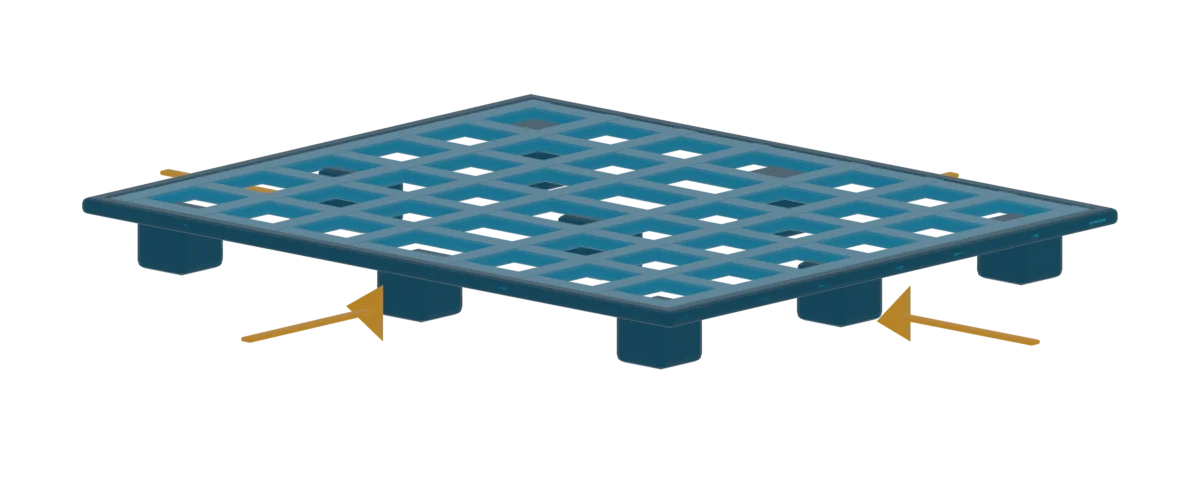
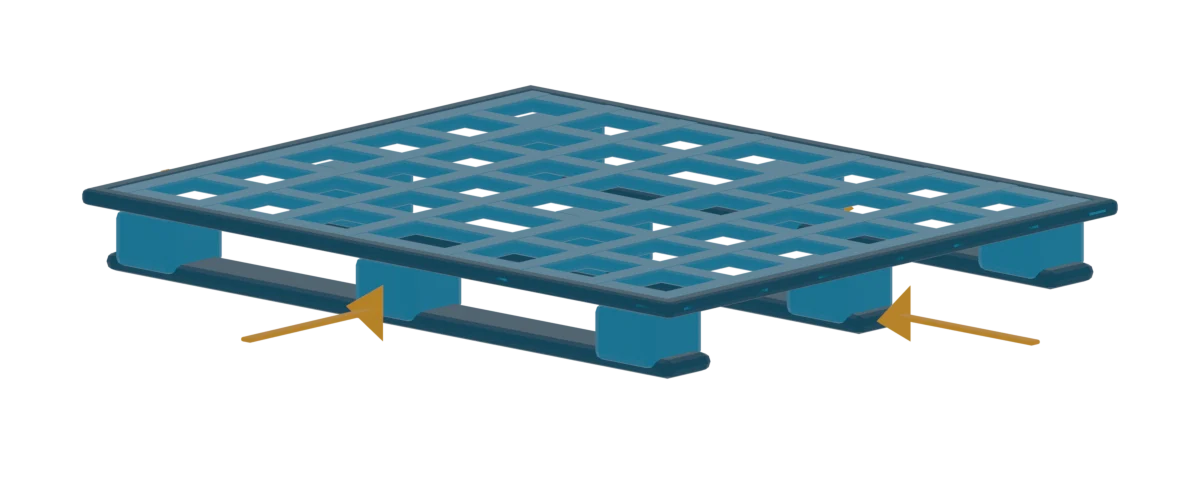
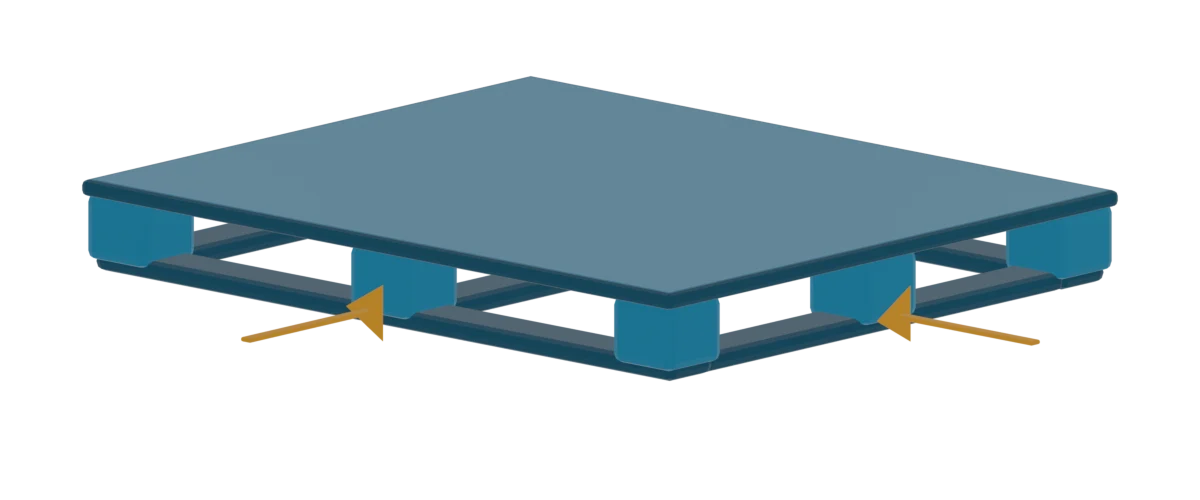
| Configuration | Empty storage | Bottom contact | Questions to ask |
|---|---|---|---|
| Nestable feet | Usually the best nesting ratio | Separate feet or legs | Will feet track on the conveyor? Is the model rated for the loaded handling method? |
| Three runners | Does not nest like open feet | Three longitudinal skids | Which sides accept a pallet jack? Are the runners compatible with rack beams and rollers? |
| Perimeter base | Stackable, usually not nestable | Outer frame, sometimes with center members | Is the stated load static, dynamic or unsupported rack load? What is the rack span? |
02 · Performance labels
Nestable, stackable and rackable are not synonyms
Nestable
The empty pallets overlap vertically. Manufacturer nest ratios describe the storage benefit for a named model; they are not a universal property of plastic.
Stackable
The pallet has a bottom structure intended to sit securely on a floor or another loaded unit. “Stackable” does not automatically mean safe in unsupported racking.
Rackable
The manufacturer rates the pallet for a stated unsupported rack condition. Span, load distribution, temperature, reinforcement and duration can all affect that rating.
03 · Top surface
Solid deck or ventilated deck?
A ventilated or grid deck uses openings to reduce material, allow air movement and let water drain. The openings also reduce the continuous surface beneath small cartons, bags or flexible packaging. Check the smallest package footprint and any cleanliness requirement.
A solid deck gives broader product support and a surface with fewer openings. Seam geometry, drain details and molded texture still vary by model. “Plastic” alone does not establish a sanitation approval, food-contact suitability, fire rating or wash protocol; those claims belong to the selected material and product documentation.
04 · Specifications
Read every plastic pallet rating in context
- Static load
- The pallet and load are supported on a level surface. This is usually the largest published number and should not be substituted for a rack rating.
- Dynamic load
- The pallet is handled by lift equipment. Entry direction, fork spacing, load distribution and travel conditions still matter.
- Rack load
- The pallet bridges an unsupported span. Confirm beam orientation, clear span, reinforcement, deflection limit and temperature for the named model.
Manufacturer catalogs illustrate the difference. ORBIS lists nestable, stackable and rackable families separately; an individual 40 × 48 nestable product page publishes its own dimensions, nest ratio and handling ratings, while its rackable category describes unsupported-rack models. Those figures are product examples, not ratings for plastic pallets generally.
05 · Selection checklist
What to verify before ordering
- Measure the load and every contact point. Record footprint, loaded height, gross weight, carton or bag support needs and expected overhang.
- Name the support environment. Floor, block stack, conveyor, flow rack and unsupported selective rack are different conditions.
- List the handling equipment. Confirm forklift and pallet-jack entry from the sides operators actually use, plus fork spacing and clearance.
- Choose the return strategy. Nestable pallets save space on empty returns; runner and perimeter-base designs trade that nesting for bottom support.
- Specify the deck and material option. Ask for documentation supporting any cleaning, temperature, food-contact, fire, recycled-content or identification requirement.
- Get the product drawing and rating conditions. Do not accept a footprint and one unlabeled “capacity” number as a complete specification.
Source ledger
Sources and scope
The configurations above are generic teaching models, not copies of a branded product. Product examples are labeled and should be checked against the current supplier drawing before purchase.
- ORBIS — Plastic pallet families: separates nestable, stackable and rackable categories.
- ORBIS — 40 × 48 NPL 352: named nine-leg nestable product example with model-specific dimensions and ratings.
- ORBIS — Rackable plastic pallets: named category and unsupported-rack use description.
- USDA APHIS — Export ISPM 15-compliant wood packaging: confirms that ISPM 15 applies to regulated wood packaging, not all-plastic pallets.