
A lower deck may help when
- loads are block-stacked;
- conveyors need continuous or predictable base contact;
- the pallet must stay square through repeated handling;
- a named rack rating depends on lower members.
Field guide 04 · Bottom construction
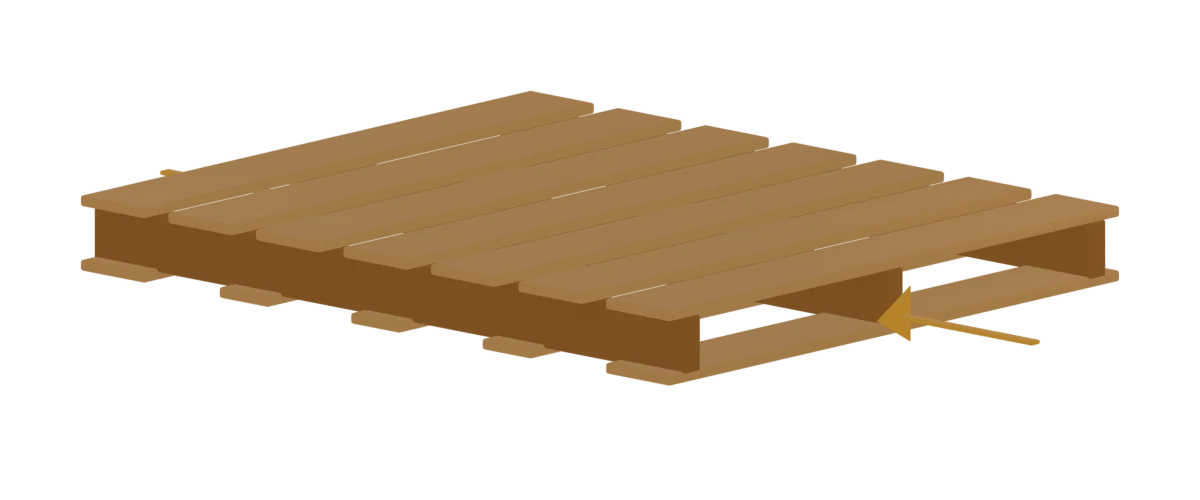
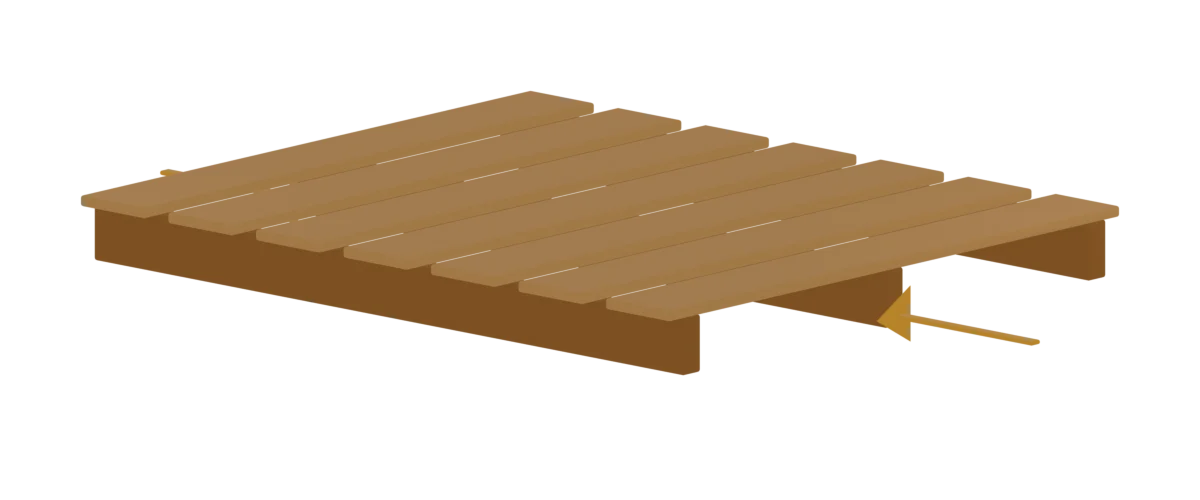
In everyday North American shipping, a skid usually has no bottom deck. A pallet normally has a top and bottom deck. The vocabulary is not universal, so order from the drawing—not the noun.
| Question | Pallet | Skid |
|---|---|---|
| Bottom | Usually includes bottom boards, runners or a perimeter base | Commonly no conventional bottom deck |
| Stacking contact | Lower deck can spread contact over the load below | Runners concentrate contact in fewer lines |
| Dragging | Bottom members can catch or add friction | Runners may suit controlled dragging in some applications |
| Racking | Possible only when the design and stated rating match the rack support | Must be engineered for the exact support; the name gives no rack rating |
| Height and tare | Lower deck adds material and can add height and weight | May be lower or lighter, but dimensions remain design-specific |
No universal skid footprint exists. A skid may be built around machinery, a crate, a one-way export load or the receiver’s handling system. Some skids use the common 48 × 40 inch North American footprint, but that size alone does not make the platform a pallet or a skid.
Record length, width and empty height, then document runner direction and spacing. If a receiver asks for a “standard skid,” ask which footprint, entry sides and bottom configuration it accepts.
These are selection considerations, not promises. Product support, fasteners, lumber, moisture, impact, rack span and concentrated loads still control performance.
Checked November 14, 2026. Terminology varies; the physical drawing controls.
Enter the footprint and empty height shown on the supplier drawing or measured at receiving.